From 2009-2013, U.S. fire departments responded to an estimated 9,300 home structure fires that were started by candles. These fires caused 86 deaths, 827 injuries and $374 million in direct property damage. Here is everything you need to know about candle fire prevention!
Candle Fires by the Numbers
- Candles caused 3% of reported home fires, 3% of home fire deaths, 6% of home fire injuries, and 5% of the direct property damage in home fires.
- Roughly one-third (36%) of home candle fires started in bedrooms. These fires caused 32% of the associated deaths and 47% of the associated injuries.
- Falling asleep was a factor in 11% percent of the home candle fires and 30% of the associated deaths.
- On average, 25 home candle fires were reported per day.
- More than half (58%) of home candle fires occurred when some form of combustible material was left or came too close to the candle.
- December is the peak time of year for home candle fires. In December, 11% of home candle fires began with decorations compared to 4% the rest of the year.
https://www.youtube.com/watch?v=u41GlE8fAb4
Candle Safety Tips
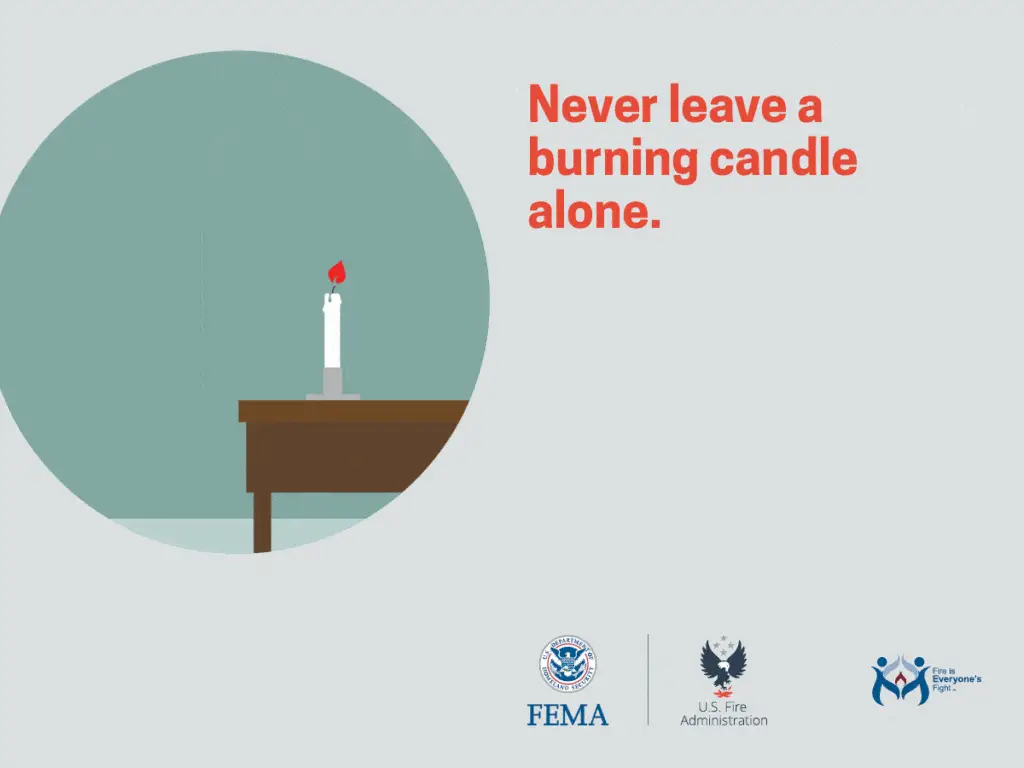
- Blow out all candles when you leave the room or go to bed. Avoid the use of candles in the bedroom and other areas where people may fall asleep.
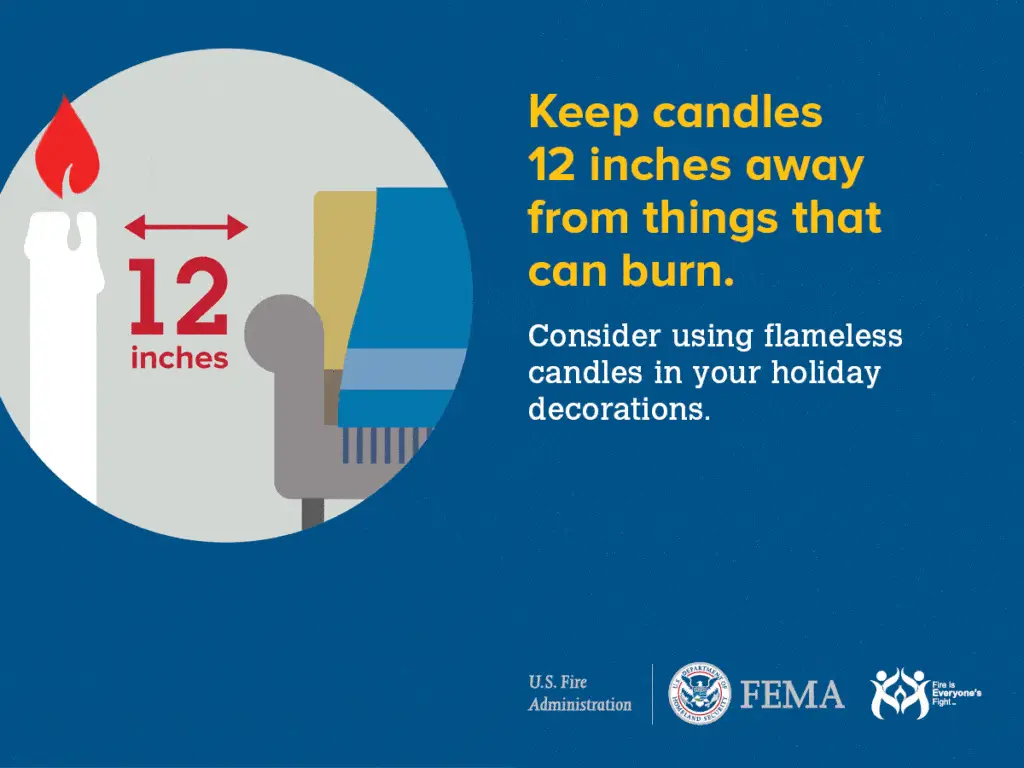
- Keep candles at least 12 inches away from anything that can burn.
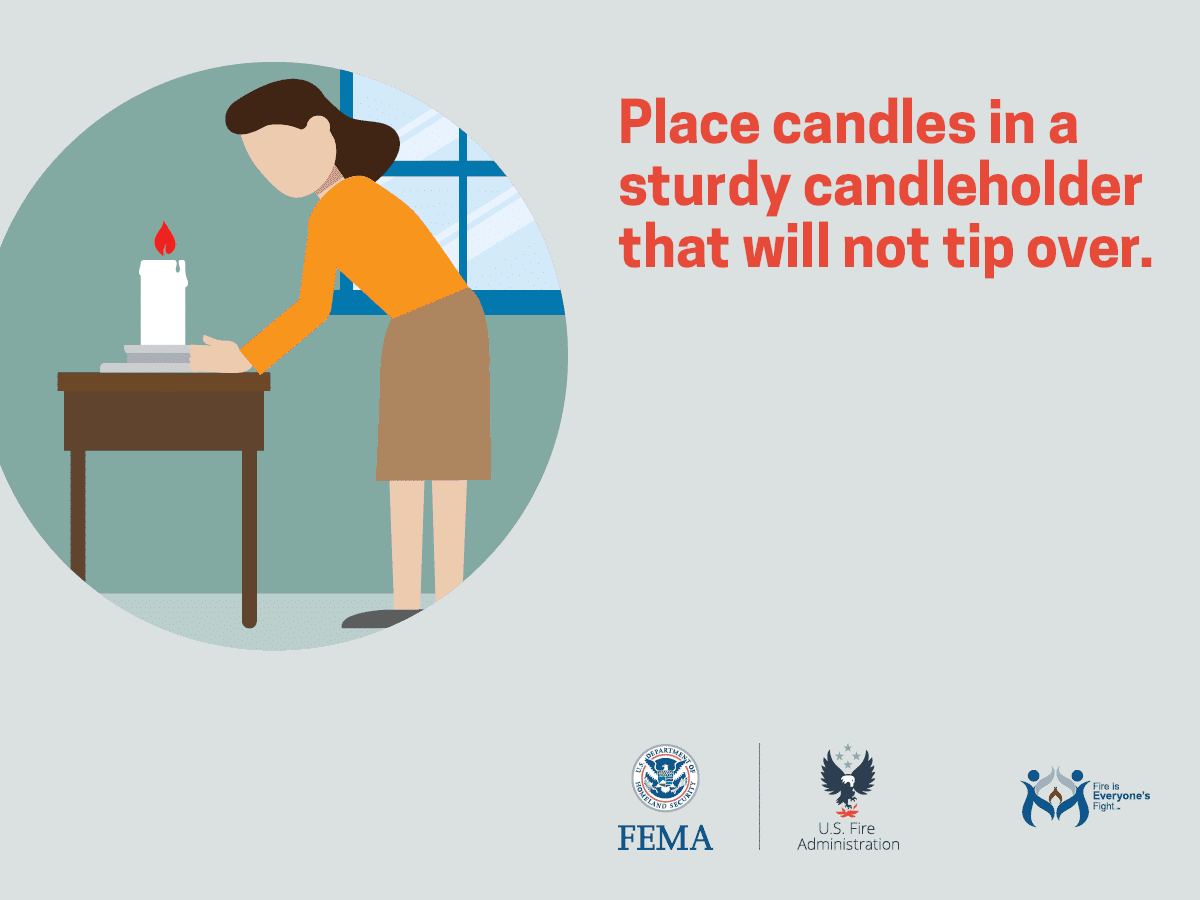
- Use candle holders that are sturdy, and won’t tip over easily.
- Put candle holders on a sturdy, uncluttered surface.
- Light candles carefully. Keep your hair and any loose clothing away from the flame.
- Don’t burn a candle all the way down — put it out before it gets too close to the holder or container.
- Never use a candle if oxygen is used in the home.
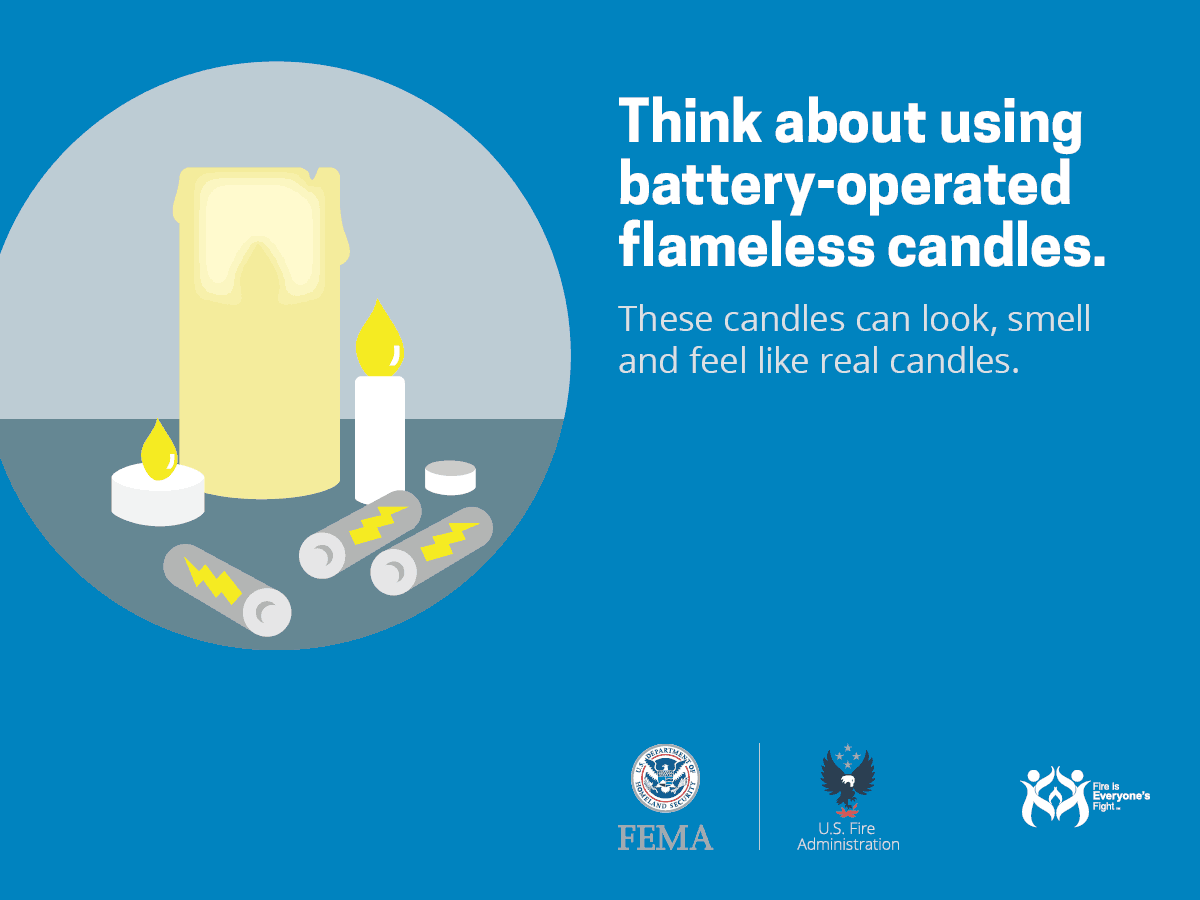
- Have flashlights and battery-powered lighting ready to use during a power outage. Never use candles.
https://www.youtube.com/watch?v=6jh6EhQVjL0
Quick Tips to Share
Share these graphics with your family and friends this season! We encourage you to print these and also share on social media.
Content Source: National Fire Protection Association and U.S. Fire Administration